 Ylises
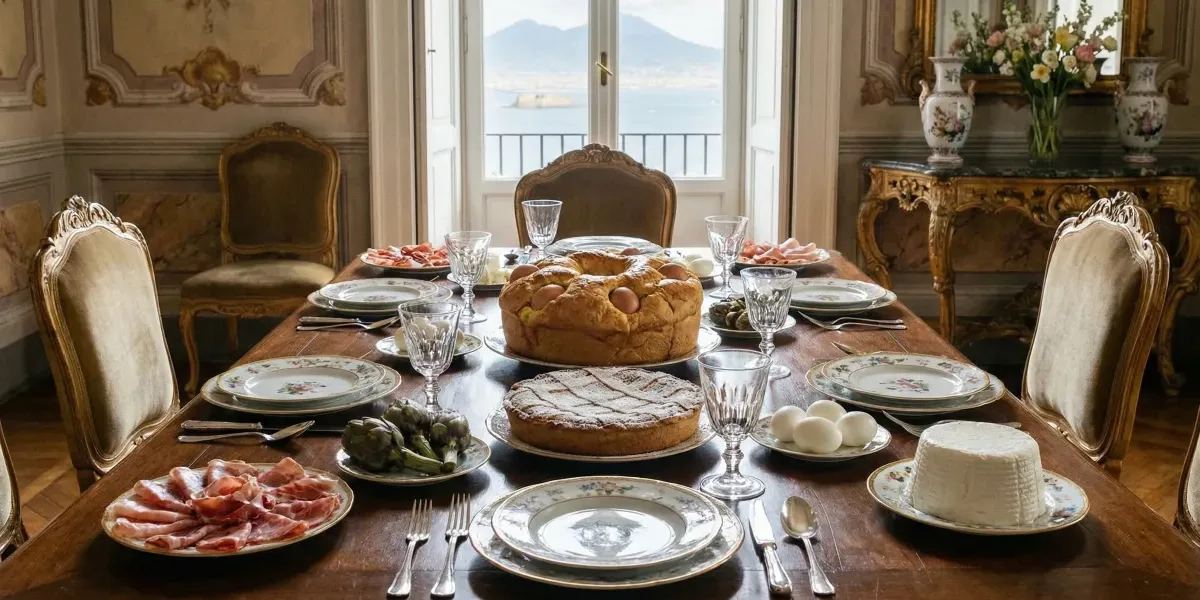
 Experiencing Easter food in Naples is a true explosion of faith, color, and above all, flavor. First, lively processions fill the bustling streets. Consequently, Neapolitan kitchens transform into sacred temples. There, families prepare dishes featuring centuries of history. Therefore, if you already have your tickets, this guide is your culinary map. With it, you will easily navigate the Neapolitan Paschal banquet.
Furthermore, it is not just about eating. Instead, it is about actively participating in a living tradition. From the robust Casatiello to the heavenly Pastiera, we tell you exactly what to order. Additionally, we show you exactly where to find these treats. We also explain the fascinating history behind every single bite. Moreover, we include culinary technical details for curious minds. Get ready for a gastronomic journey straight to the heart of local culture.
The History and Symbolism Behind Easter Food in Naples
The cuisine of this holiday serves as an edible history book. Indeed, each dish carries deep religious and cultural symbolism. Specifically, it was born from fusing pagan spring rituals with the Christian celebration of the Resurrection.
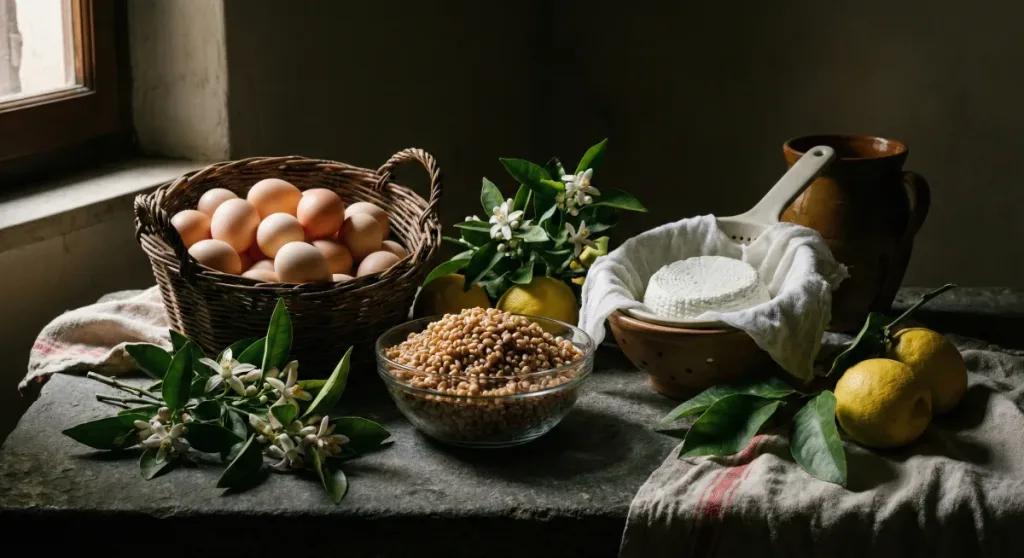
Naturally, the ingredients themselves speak volumes. First, whole eggs embedded in bread represent life and resurrection. Next, the omnipresent ricotta cheese symbolizes abundance and renewal. Meanwhile, bitter herbs recall the bitterness of the Passion. However, this culinary tradition is definitely not a simple menu. Rather, it acts as a narrative deeply rooted in Neapolitan identity. Consequently, family and community gather around a table that serves as both altar and home.
The King of the Easter Menu in Naples: Casatiello and Tortano
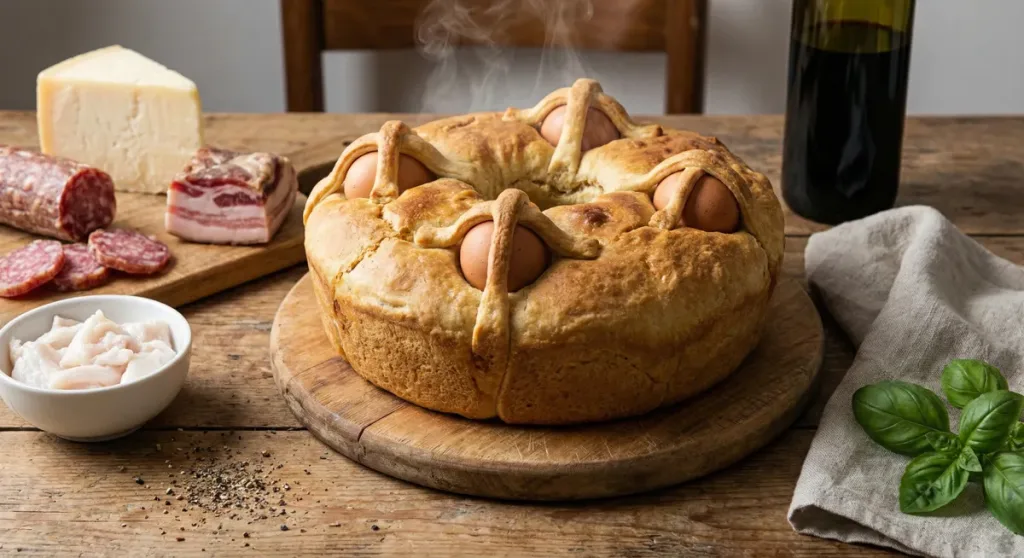
When you think about typical Easter food in Naples, the Casatiello immediately comes to mind. Undoubtedly, it is the undisputed centerpiece of the Resurrection Sunday table.
- What exactly is it?: It is a rich, savory bread ring. Furthermore, it is incredibly moist and fragrant. Bakers fill it with an opulent mixture of cheeses, like provola and pecorino. They also add Neapolitan salami and crispy pork cracklings (ciccioli). Notably, its hallmark feature is the whole eggs. People place these eggs, shell and all, in a cross shape on top of the dough. Finally, they bake everything together.
- Technical and Scientific Details: Casatiello dough benefits greatly from a long fermentation. Specifically, this autolysis process naturally develops the gluten. Thus, it creates a tender, airy crumb. Meanwhile, the fat from the cheese and cracklings integrates smoothly during kneading. This encapsulates air and contributes to a wonderfully soft texture.
- Symbolism: The circular shape clearly represents the crown of thorns and eternity. Moreover, the crossed eggs are the most obvious symbol of the Resurrection.
- Casatiello vs. Tortano: People often confuse these two pieces of bread. However, the key difference is that the Tortano does not have eggs on top. Traditionally, locals eat it on Easter Monday (Pasquetta) during countryside excursions. Additionally, its dough might be slightly less enriched.
- Where to Order It: You will not commonly find it on restaurant menus as a main dish. Mainly, it is a family celebration food. Therefore, your best option is visiting a renowned pasticceria or panificio (bakery) right before Sunday. Just ask for it by the slice (“un etto di casatiello, per favore”) to taste it. However, some traditional trattorias might offer it as a special appetizer.
The Queen of Neapolitan Easter Food: The Pastiera
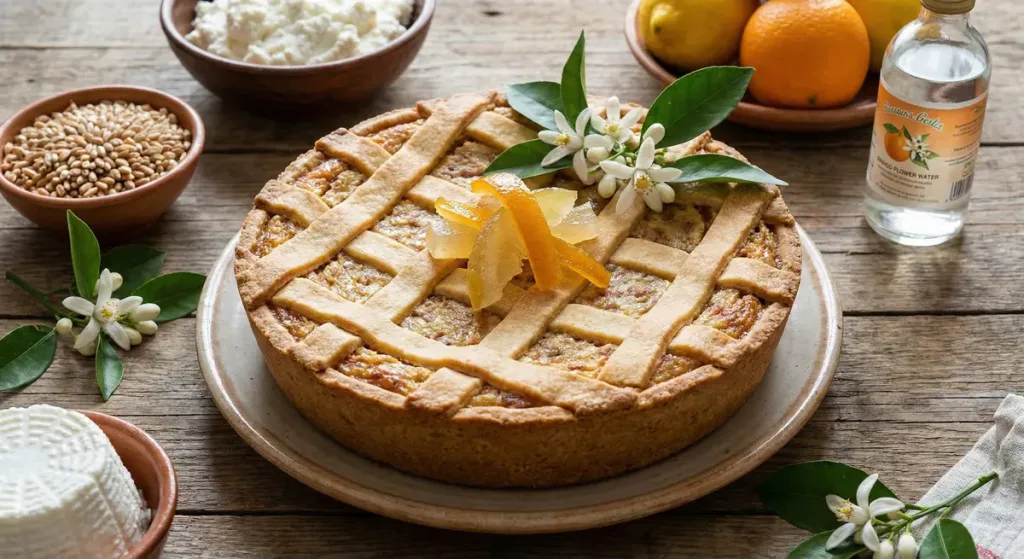
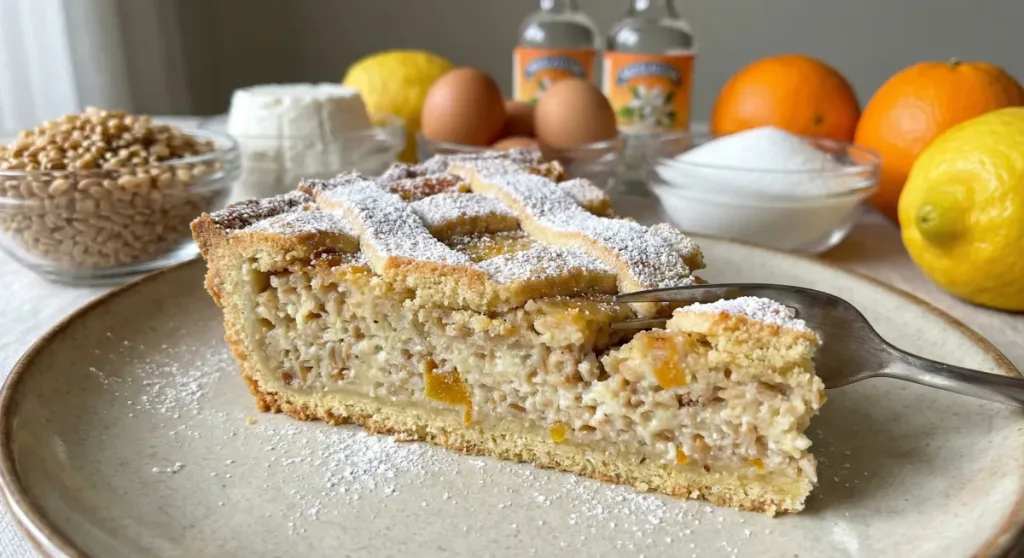
If the Casatiello is the king, the Pastiera is undoubtedly the queen. It is the ultimate local holiday dessert. Furthermore, its preparation involves various rituals and fun superstitions. For example, tradition says you must knead it with pure joy.
- What is it? :It is a shortcrust pastry tart filled with a sublime cream. Cooks make this cream using cooked wheat, which symbolizes reborn life. They also add sifted ricotta, eggs, sugar, orange blossom water, and candied fruit. As a result, you get a perfect balance of creaminess, textured wheat, and a floral-citrus aroma.
- Ingredient Science: The success of the Pastiera relies heavily on treating the wheat and ricotta correctly. First, you slowly cook the soft wheat in milk. Consequently, the starches release, thickening the mixture perfectly. Next, you must drain the ricotta for hours, or even a full day. This crucial step removes any excess whey. Therefore, it prevents the filling from souring and guarantees a silky consistency. Finally, the orange blossom water cuts through the rich dairy perfectly.
- The Great Debate: Grano vs. Riso. The authentic, traditional Pastiera uses wheat (grano). Conversely, the rice version is a modern, less common variant. It originated simply based on ingredient availability in certain eras. Definitely insist on the wheat version for a genuine experience.
- Regional Variations: In some provincial areas, bakers add a splash of Strega herbal liqueur. Alternatively, they might replace some candied fruit with cooked pear.
- Where to Buy It: Do not make any compromises here. Head straight to a historic pasticceria. Typically, you buy this dessert whole or by the slice. Order a piece (“una fetta di pastiera, per favore”) and pair it with a strong espresso. Undoubtedly, it is the perfect way to finish any holiday meal.
The Sunday Banquet: Minestra Maritata and Lamb
Easter Sunday is clearly a day for a massive family banquet. Besides the Casatiello appetizer, two main dishes define Easter food in Naples on this special day.
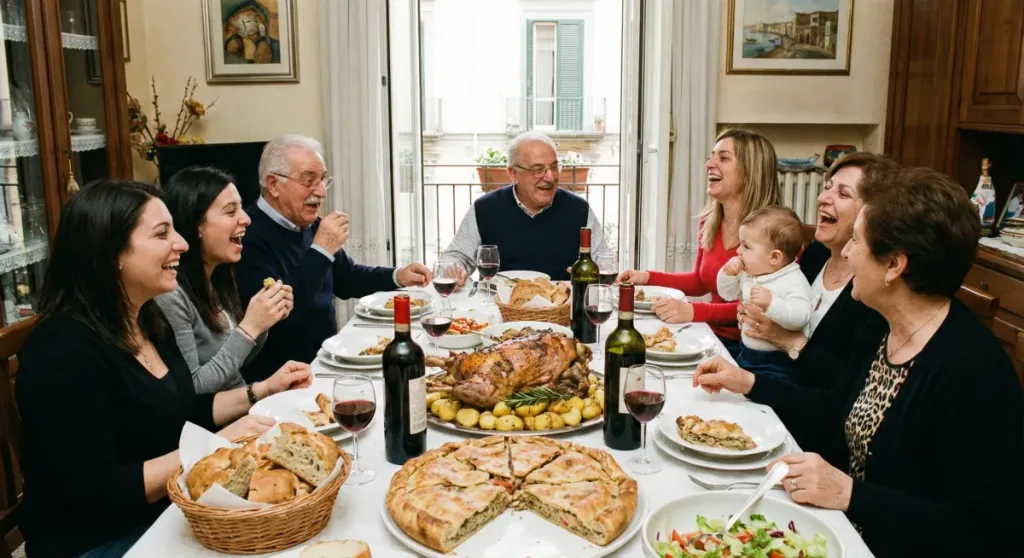
- Minestra Maritata or “Pizza Chiena”: This name can easily cause confusion. First, it is not a soup (minestra). Second, it is not a pizza. “Maritata” actually means “married.” It refers to the happy marriage between meats and cheeses. Essentially, it is a solid, savory pie. This dense pie features eggs, cheeses, cold cuts, and sometimes spinach. It is hearty, delicious, and another clear sign of holiday opulence. Locals eat it cold or at room temperature. The key lies in moisture balance. Too much liquid from the ricotta would quickly ruin the crust.
- Agnello or Capretto: Roasted lamb or kid goat stands as the quintessential main course. Cooks prepare it in the oven, often with potatoes and fragrant rosemary. Alternatively, they serve it as a rich stew. Ultimately, it represents the sacrifice of Christ. While it is a celebration dish across Italy, the Neapolitan version boasts extra flavor. This is largely due to local white wine and aromatic herbs from the Lattari Mountains.
- Where to Experience This Banquet: Look for local trattorias offering a special holiday menu (“Menù di Pasqua”). Many family restaurants prepare a fixed menu specifically for that Sunday. There, you can happily taste a progression of these incredible dishes.
Other Must-Haves in Naples Easter Cuisine
- Carciofi alla Giudia (Jewish-Style Artichokes): Despite their Roman-Jewish origin, they remain very popular here during spring. Cooks press whole artichokes and fry them twice in olive oil. Consequently, they open up and become as crispy as a flower. The double-frying technique ensures a tender interior. Meanwhile, the exterior turns perfectly golden and crunchy. They are perfect as an appetizer.
- Frittata di Pasqua: This is a tall, fluffy omelet. Cooks enrich it heavily with cheeses and cold cuts. It follows a similar concept to the “Pizza Chiena” but in an omelet format. The secret to its impressive height is beating the egg whites to stiff peaks. Then, you carefully fold them into the yolks and other ingredients. Locals usually eat it cold.
- Colomba Pasquale: This sweet, dove-shaped bread originally comes from Northern Italy. However, you will find it in every local pastry shop today. It features almonds and pearl sugar on top. Since it is lighter than Panettone, it makes a fantastic breakfast or snack alternative.
- The Finishing Touch: Authentic Limoncello After the heartiness of Casatiello and the sweetness of Pastiera, no Neapolitan banquet is complete without the king of Campania’s digestifs: Limoncello. Served very cold, this liqueur made from the peels of aromatic lemons from Sorrento or the Amalfi Coast is essential for cleansing the palate and prolonging the after-dinner conversation. If you want to bring authentic Italian magic into your own home, we’ll show you how to make it step by step in our [Homemade Limoncello Recipe].
Strategy for the Traveler
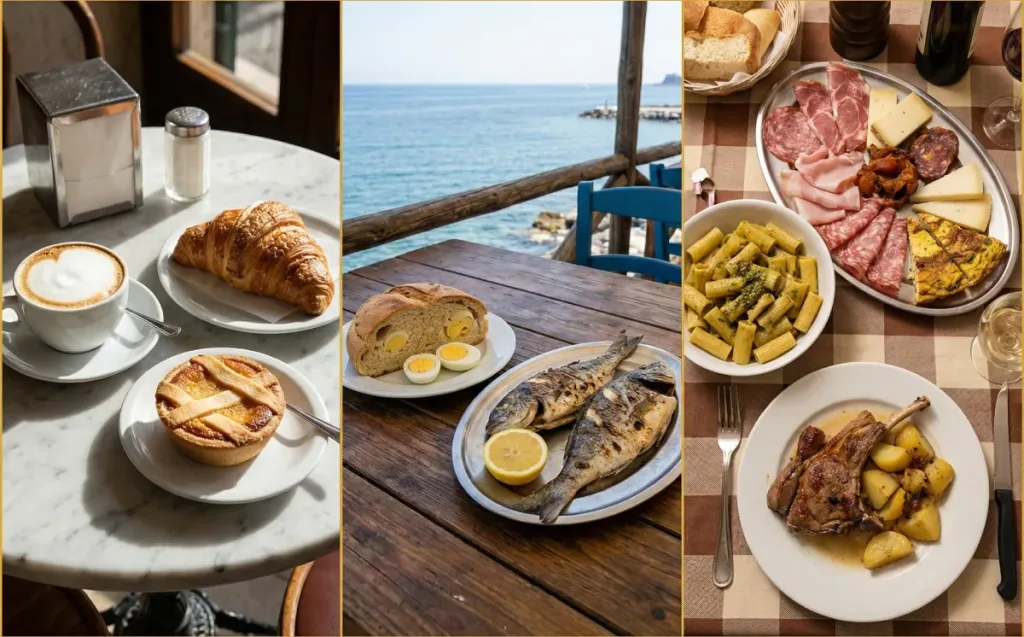
- Breakfast/Snack: Go to a pastry shop. Order a fresh croissant (cornetto) with a mini pastiera and a cappuccino.
- Lunch (Pasquetta): Find a nice trattoria near the sea or in the historic center. Ask for the tortano and some simple, fresh fish dishes.
- Dinner: Do not worry if a restaurant lacks a special holiday menu. Just order a mixed appetizer to start. Then, choose a classic pasta dish, like rigatoni alla Genovese. Finally, order the lamb if they have it available.
Conclusion: Beyond the Plate
Tasting traditional Easter food in Naples opens the door to understanding the city’s soul. Every single egg in the Casatiello tells a story of deep joy and rebirth. Therefore, do not just eat your food silently. Instead, ask about the dishes and smile as you taste them. Let the proud locals explain their rich traditions to you. By doing this, your gastronomic journey will easily become an unforgettable cultural experience. Buona Pasqua e buon appetito!
Frequently Asked Questions About Easter Food in Naples
What is the typical Easter food in Naples?
The most representative dishes are the Casatiello (a savory bread filled with cheese, cold cuts, and topped with whole eggs), the Pastiera (a sweet ricotta and wheat tart), and roasted lamb or Minestra Maritata for Easter Sunday.
What is the difference between Casatiello and Tortano?
The main visual and historical difference is that the Casatiello features whole eggs with shells placed in a cross shape on top of the dough. The Tortano does not have eggs on top and is traditionally eaten during countryside excursions on Easter Monday (Pasquetta).
Where can I buy authentic Neapolitan Pastiera?
To taste the genuine recipe, you should visit a historic pasticceria (pastry shop) in the center of Naples in the days leading up to Sunday. Always ask for the traditional “di grano” (wheat) version rather than the modern rice variant.