
 Mariella
 Wondering what Broccoli Rabe (Friarielli) actually is? Here is the quick answer: they are the ‘green gold’ of Campania, tender shoots of turnip tops with an unmistakable bitter and spicy flavor. Essential on authentic Neapolitan pizza or as a side to fresh sausages, this vegetable is the best-kept secret of Southern Italian cuisine. Below, discover their history and, most importantly, how to cook them at home step-by-step.
In Naples, just smelling the aroma of friarielli sautéed in a pan with garlic and olive oil is enough to recognize the soul of popular Neapolitan cuisine. They are the humble and tasty side dish that unites generations, the green that appears on winter tables, simple but essential. To speak of friarielli is to speak of roots, neighborhood, and tradition.
What exactly are Friarielli (Broccoli Rabe)?
Friarielli (pronounced “fria-rri-ehlli”) are the tender inflorescences and young stems of the turnip plant (Brassica rapa sylvestris), traditionally grown in the Campania region of Italy.
In English-speaking countries, their closest equivalent is Broccoli Rabe or Rapini. They feature very thin stems, abundant green leaves, and tiny closed buds that look like miniature broccoli. Their most defining characteristic is their intense, clearly bitter, and naturally spicy flavor, which perfectly cuts through the richness of fatty meats and cheeses.
They resemble broccoli but are thinner and have an intense, slightly bitter, and spicy flavor, much appreciated in Campania. Although similar versions exist in other Italian regions —such as cime di rapa in Puglia or broccoletti in Rome— Broccoli Rabe (Friarielli) from Naples is unique for its strong aroma and simple preparation, always sautéed with garlic, oil, and chili pepper.
The Difference: Friarielli vs. Rapini vs. Broccoli vs. Broccolini
It is incredibly common to confuse friarielli with other green vegetables at the American grocery store, especially with the rising popularity of Broccolini. Here is a quick visual guide so you never get it wrong (and understand why they don’t taste the same):
| Vegetable | Visual Appearance | Flavor Profile | Main Origin |
| Friarielli (Naples) | Very thin stems, lots of leaves, tiny “flowers”. | Very intense, clearly bitter, and slightly spicy. | Campania (Italy) |
| Rapini / Broccoli Rabe | Thicker stems, larger leaves, sometimes yellow flowers. | Intense bitter taste, slightly more fibrous texture. | Mediterranean / USA |
| Regular Broccoli | Large compact head, thick and short stem. | Mild, sweet, not bitter at all. | Global |
| Broccolini (Bimi/Baby) | Long tender stem, small broccoli-like head. | Very sweet and crunchy (resembles asparagus). | Natural crossbreed (Japan) |
Its history and popular origin
The Friariello is the perfect example of how Neapolitan cuisine knows how to transform the humble into art. For centuries, it was a vegetable of the poor, cultivated on the outskirts of Naples, especially in the districts of Sanità, Materdei, and Vomerese, where the peasants planted these leaves on the margins of the fields.
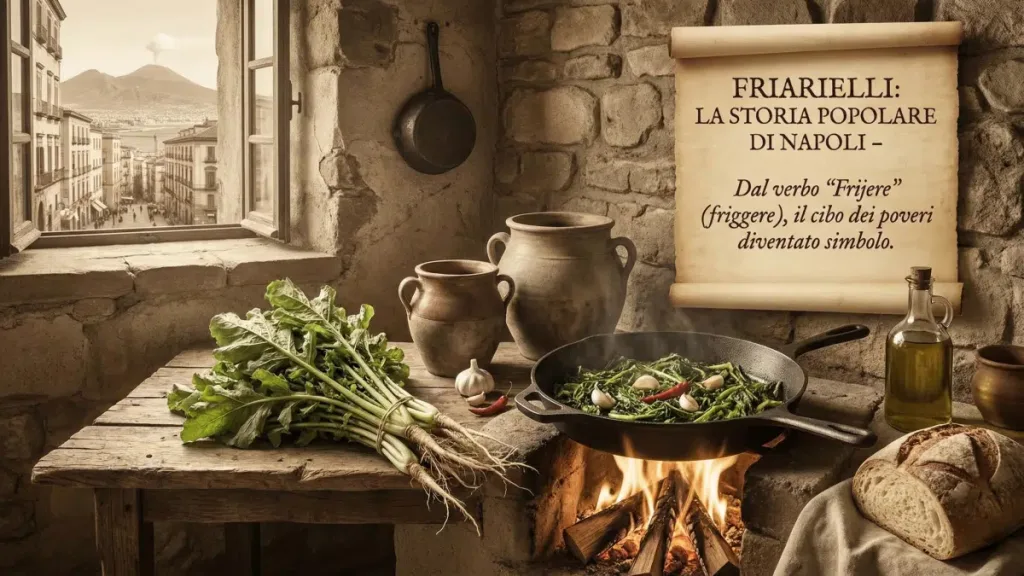
The name probably comes from the Neapolitan verb frijere, which means “to fry,” because this is how it is traditionally cooked: “friarielli, aglio e peperoncino”, always in a frying pan. Over time, this vegetable became a symbol of Neapolitan identity: simple, strong, with character. Today, they are an essential part of winter gastronomy and are served in both popular taverns and gourmet restaurants.
When is the best season for Broccoli Rabe (Friarielli)?
Friarielli are a winter season vegetable. Their best time is from November to March, when the cold weather enhances their flavor and tender texture.
In Neapolitan markets, they are easily recognized by their green bunches, their curly leaves, and their characteristic perfume. Neapolitans buy them fresh, still with the stem, and clean them carefully, removing the hardest parts before cooking.
How to cook Broccoli Rabe (Friarielli) traditionally
The classic method is simple and almost ritualistic. Here is the step-by-step for the perfect Broccoli Rabe (Friarielli):
- Clean: The friarielli are cleaned and washed well.
- Sauté: In a large frying pan, heat extra virgin olive oil with whole garlic and a little chili pepper.
- Cook: Add the friarielli, still wet, cover, and cook slowly until tender.
- Season: They are salted at the end to maintain their intense flavor.
The result is a humble dish but with an unmistakable aromatic power, combining bitterness, sweetness, and a spicy touch.
Where to Buy Friarielli & Best Substitutes
If you don’t live in Southern Italy, finding fresh authentic Neapolitan friarielli at your local farmers’ market is almost impossible. But you don’t have to give up on making an authentic Neapolitan sausage pizza at home. Here are your best options:
- Buy them Jarred (The Most Authentic Option): The easiest and most authentic way to consume them outside of Italy is buying them in glass jars. They come already sautéed and preserved in sunflower oil, garlic, and chili pepper. They are ready to be put straight onto a pizza or tossed with pasta.
- Substitute 1: Fresh Rapini (Broccoli Rabe). This is the genetic cousin of the friariello. You can easily find Rapini in most US grocery stores. Just remove the thickest bottom stems, keep the tender shoots and leaves, and cook them exactly the same way.
- Substitute 2: Cime di Rapa. If you visit a specialty Italian market, you might find cime di rapa (typical from the Puglia region). They are the exact same plant, just harvested a bit later when they are larger.
Typical dishes with Friarielli
This vegetable is extremely versatile, but in Naples, there are combinations that are already part of the city’s culinary DNA.
Salsiccia e Friarielli: the perfect marriage in Naples
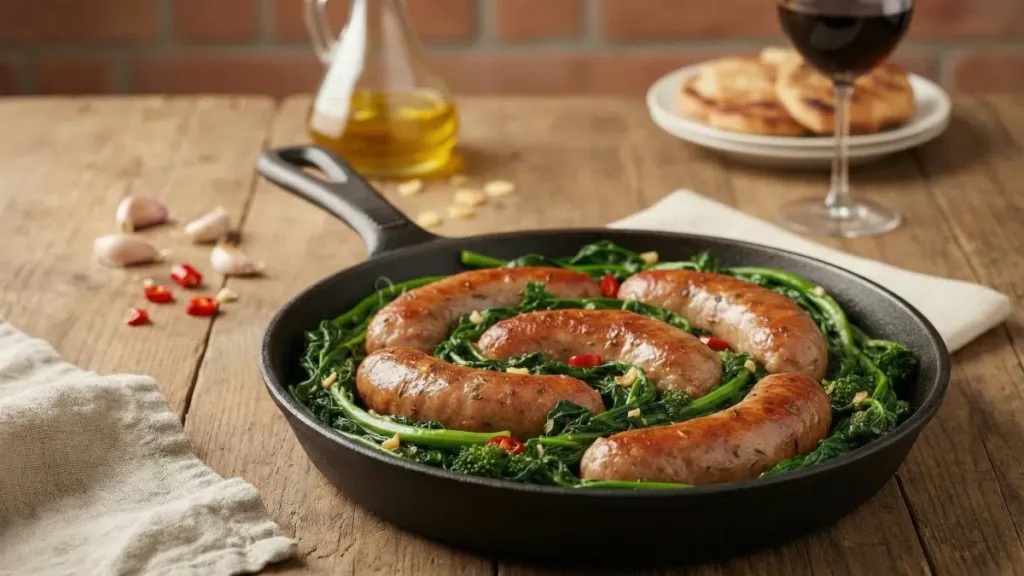
It is the perfect marriage: fresh pan-seared pork sausages together with sautéed Broccoli Rabe (Friarielli). The contrast between fat and bitterness creates an irresistible balance. It is served as a second course, as a sandwich (panino con salsiccia e friarielli) or even as a pizza topping.
Pizza Salsiccia e Friarielli
One of the most loved pizzas in Naples. It is prepared with a white base (without tomato), mozzarella, chopped sausage, and the sautéed greens. The result is a robust pizza, intense and full of Neapolitan flavor, perfect for the cold months.
Pasta with Friarielli
Less common but equally delicious. It can be made with orecchiette, fusilli, or rigatoni, mixing the vegetables with oil, garlic, chili, and a touch of grated pecorino.
Calzoni or bread stuffed with Friarielli
In many Neapolitan bakeries, especially in winter, they bake calzoni or rustic bread stuffed with friarielli, sausage, and provola. It is a street recipe that perfectly represents the popular soul of Naples: direct flavor, without artifice.
The soul of Broccoli Rabe (Friarielli)
The Friariello is not just a vegetable: it is a declaration of identity. It speaks of the Neapolitan winter, of the smell of hot oil in small kitchens, of the patience of those who turn the simple into tasty.
It is the green that brightens up cold days, the flavor that unites the peasant past with today’s joy of eating well and without complications. Because in Naples, even a bitter leaf can become poetry on the plate.
With much affection,
Your Neapolitan girl
Frequently Asked Questions about Friarielli
Are Friarielli the same as Broccoli Rabe?
Yes, Friarielli is the Neapolitan name for what is known as Broccoli Rabe or Rapini in English-speaking countries. While biologically the same, the Neapolitan variety is often harvested younger and more tender, and the preparation method (sautéed directly in oil rather than blanched) gives it a distinct texture and flavor profile.
Why are Friarielli bitter and how do you reduce it?
The bitterness is natural to this cruciferous vegetable. While Neapolitans cherish this bitter kick, you can reduce it by blanching the greens in salted boiling water for 2-3 minutes before sautéing them. However, the traditional Neapolitan way is to cook them directly in the pan with plenty of garlic and chili to complement the bitterness.