
 Mariella
 Neapolitan Carnival masks are the heart of a centuries-old celebration. This carnival has roots in Roman rites and the Spanish viceroyalty. For this reason, it flourished as a unique street theater. Firstly, the masks were not just costumes. They were tools for social satire and temporary liberation. Furthermore, they allowed social hierarchies to blur during the festivities.
Living History of a Centuries-Old Tradition
The Naples Carnival has a rich history. Its splendor during the 17th and 18th centuries transformed the city. Consequently, it turned Naples into a vast open-air stage. It is important to note that this period influenced other traditions of Naples. Today, the city keeps this legacy alive through craftsmanship and theater.
Emblematic Masks: The Faces of Neapolitan Comedy
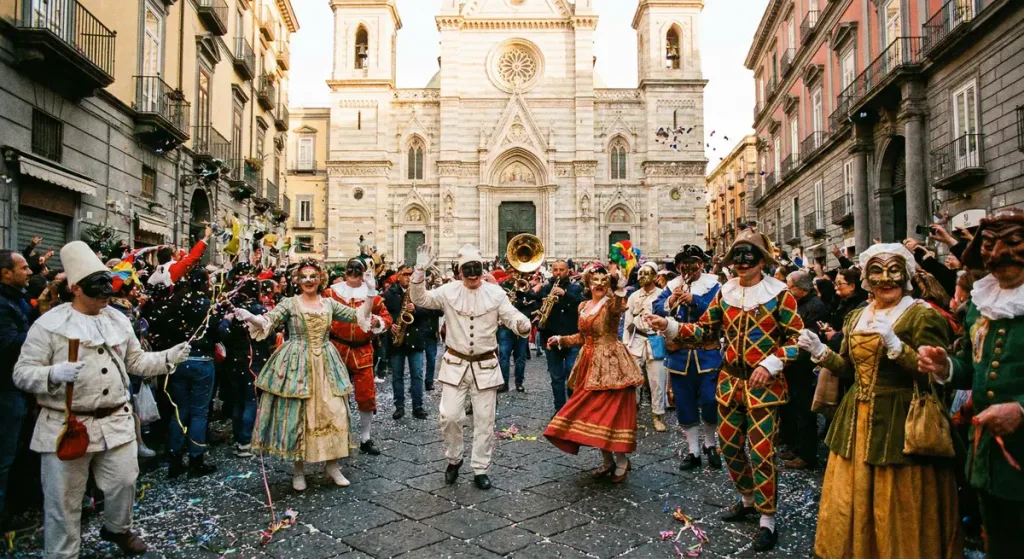
Neapolitan Carnival masks are archetypes with history. Therefore, knowing these characters is key to understanding the city’s soul.
Pulcinella: The Soul of the People
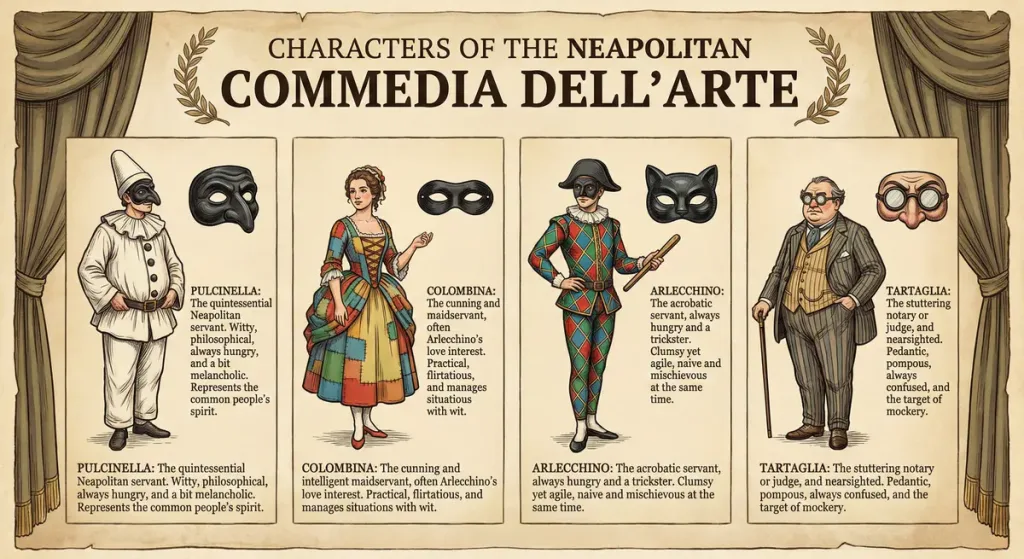
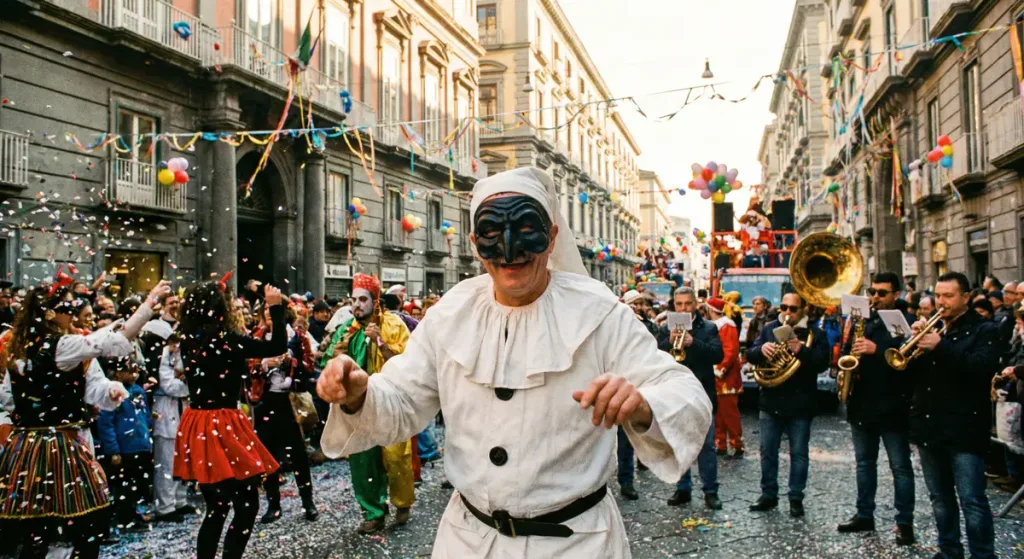
Pulcinella is the ultimate Neapolitan mask. This character features a hooked nose and a white suit. On the other hand, he embodies popular wit and resilience. He represents the eternal servant. Sometimes he is clever, and other times he acts foolish. In consequence, he constantly challenges authority. His black mask is the most iconic among all Neapolitan carnival masks.
Colombina: Sharpness with a Female Face
Colombina is of Venetian origin. However, she adapted perfectly to Naples. She is the smart and flirtatious maid. For this reason, she serves as a vital female counterpart. Her traditional Neapolitan eye mask only covers the eyes. Thus, it highlights her beauty and practical intelligence in comedy plots.
Arlecchino: Multicoloured Chaos
Arlecchino is another key character in commedia dell’arte. He is the agile and acrobatic servant. His multicoloured diamond-patterned costume and black mask reflect his dual nature. He is both naive and mischievous. He also brings the physical chaos and visual comedy necessary in any carnival.
Symbology and Cultural Meaning
Neapolitan Carnival masks are a coded cultural language. Each one carries a deep meaning:
- Temporary Liberation: The mask was the great social equalizer. It allowed for a controlled transgression.
- Veiled Social Criticism: It was used to criticize rulers and social vices. For instance, Pulcinella was the voice of the people.
- Collective Identity: Characters became symbols of identity. This identity is resilient and ironic.
- Renewal Rite: The use of masks is linked to rites of passage. It is similar to the legend of the Befana, where cycles are renewed.
The Art of Creation: How Traditional Masks Are Made
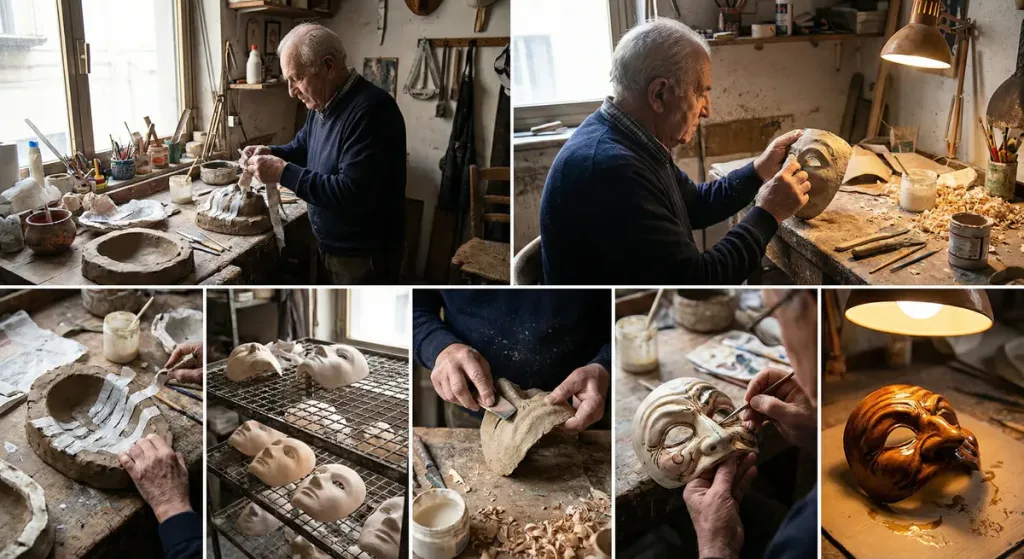
The making of these traditional masks is a handcrafted art passed down through generations in the historic center.
- Molding: The process begins with a clay model. Layers of papier-mâché are applied over it.
- Drying: Once dry, the layer is removed from the mold, forming the basic shape.
- Finishing: The edges are trimmed and the surface is sanded to remove imperfections.
- Decoration: Several layers of paint are applied by hand using fine brushes.
- Varnishing: A final coat protects the paint and gives the mask its shine.
Carnival in Modern-Day Naples
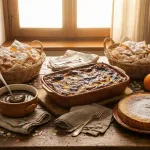
Today, the Neapolitan Carnival has regained its former strength. It preserves its theatrical essence and its deep-rooted connection to local cuisine. The festivities boast their own unique flavor, featuring traditional lasagna and seasonal sweets. You can learn more about the typical Carnival food in Naples via this link. In conclusion, contemporary artists are now reinterpreting the traditional masks of the Neapolitan Carnival for new generations.
Conclusion: The Eternal Face of a City
Exploring the Neapolitan Carnival Masks means understanding how a city turned theatre into everyday life. Pulcinella, Colombina, and Arlecchino are not merely festive characters: they are living symbols of satire, collective identity, and social liberation that shaped centuries of Neapolitan history.
These masks, born from the Commedia dell’Arte and refined through papier-mâché craftsmanship in the historic center, still speak the same cultural language today: criticizing without fear, laughing at power, and celebrating popular wit. Their presence in today’s carnival proves that this tradition is not a memory of the past, but an active expression of Partenope’s identity.
Each Neapolitan mask is, in fact, a fragment of cultural memory. A face that has passed through Roman rites, the Spanish viceroyalty, and modern times without losing its meaning. For this reason, understanding the Neapolitan Carnival Masks is understanding the soul of the city: a place where history, art, and people meet every year in streets transformed into a stage.
Frequently Asked Questions about the Neapolitan Carnival Masks
What are the most famous Neapolitan Carnival Masks?
The most iconic Neapolitan Carnival Masks are Pulcinella, Colombina, and Arlecchino. These characters come from the Commedia dell’Arte and represent social archetypes that have been part of Neapolitan street theatre for centuries.
Who is Pulcinella and why is he the most important mask of Naples?
Pulcinella is the quintessential Neapolitan mask. With his white costume, hooked nose, and black mask, he represents wit, resilience, and popular satire. Historically, he was the voice of the people in opposition to authority during carnival.
What is the meaning behind the Neapolitan Carnival Masks?
The masks symbolize the temporary liberation from social hierarchies, subtle criticism of rulers and social vices, the collective identity of the Neapolitan people, and an annual rite of renewal linked to ancient traditions.
What is the historical origin of the Carnival of Naples?
The Carnival of Naples has roots in Roman rites and developed strongly during the Spanish viceroyalty. Its greatest splendor occurred between the 17th and 18th centuries, when the city became a vast open-air theatrical stage.
How are Neapolitan masks related to the Commedia dell’Arte?
The masks of the Neapolitan carnival come directly from the Italian Commedia dell’Arte. Characters such as Pulcinella, Colombina, and Arlecchino were theatrical figures that moved from the stage to the streets during carnival.
How are traditional Neapolitan Carnival Masks made?
The masks are handcrafted using a papier-mâché process over clay molds. After drying, they are sanded, hand-painted with fine brushes, and varnished to protect the finish.
What does Colombina represent in the Neapolitan carnival masks?
Colombina is the clever and flirtatious maid. Her small mask covers only the eyes and symbolizes practical feminine intelligence within the theatrical plots of Neapolitan comedy.
Who is Arlecchino and what does his multicolored costume symbolize?
Arlecchino is the agile and acrobatic servant of the Commedia dell’Arte. His multicolored diamond-patterned costume represents his chaotic, naive, and mischievous nature, bringing dynamism and visual comedy to the carnival.
Why did masks allow social criticism during carnival?
The anonymity provided by the masks allowed citizens to criticize rulers and expose social vices without fear of reprisal, turning the carnival into a space for satire and freedom of expression.
Where can traditional Neapolitan Carnival Masks be found today?
Today, artisans in the historic center of Naples continue to make masks using traditional methods. Contemporary artists also reinterpret these models to keep the tradition alive for new generations.