 Mariella
 If you are looking to discover the authentic Carnival food in Naples, you must prepare yourself—both physically and mentally—for a culinary experience that is intense, baroque, and absolutely wonderful. Unlike other regions of Italy, such as Venice or Viareggio, where the celebration focuses on street parades or elegant masks, in the capital of Campania, the true party is, above all, on the plate.
The local saying is an irrefutable sentence known by every Neapolitan: “A Carnevale ogni scherzo vale… ma a tavola non si scherza” (At Carnival every joke counts… but at the table, we don’t joke). In this article, we will thoroughly explore the sacred menu of Carnival food in Naples, traveling from the monumental architecture of the Lasagna to the symphony of fried sweets that flood the city’s windows from Spaccanapoli up to the Vomero district. Prepare to understand why, in Naples, excess is considered a virtue.
The Concept of “Grasso” in Carnival Food in Naples
To truly understand Carnival food in Naples, one must first understand the liturgical calendar and the social history of the city. Carnival marks the specific days leading up to Ash Wednesday, the beginning of Lent—a period that historically demanded strict fasting and total abstinence from meat.
Therefore, Neapolitan gastronomy responded to this impending austerity with the concept of “Grasso” (fat or grease). It was mandatory to consume every piece of meat, lard, and egg available in the pantry. It is no coincidence that the pig is the “totem animal” of this season. Carnival cuisine is a cuisine of resistance against hunger and prohibition, an explosion of calories, flavor, and joy. Here, there is absolutely no room for “light” options; it is a full-throated celebration of life through culinary opulence.
Lasagna: The Queen of Carnival Food in Naples
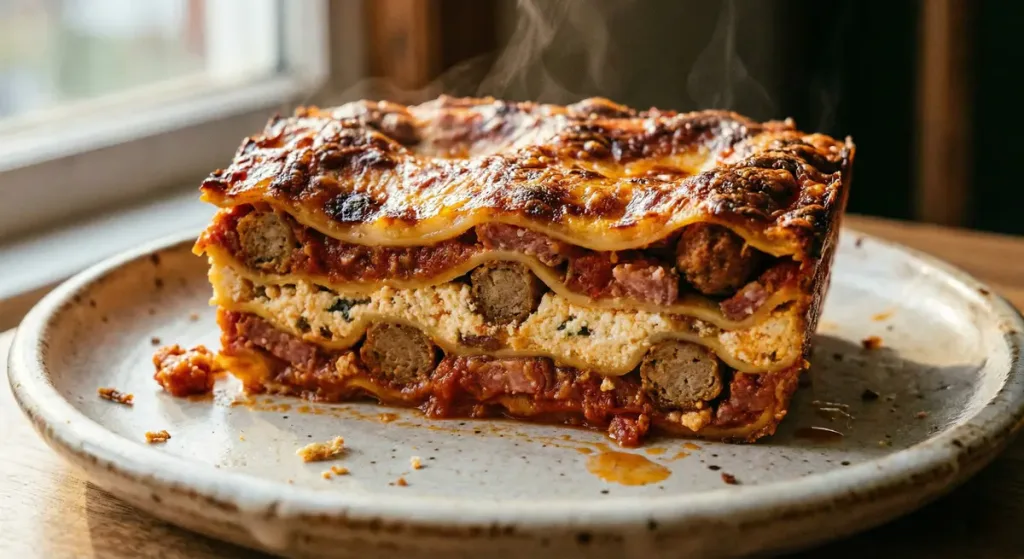
When talking about Carnival food in Naples, the first mandatory, unavoidable, and majestic dish is the Lasagna Napoletana. If you are used to the Bolognese version or the international frozen variations, you must erase that image from your mind immediately.
The Neapolitan version is not just a pasta dish; it is an architecture of excess designed to bid a grand farewell to meat before Lent arrives. It is tall, dense, complex, and requires hours of dedication. It is the dish that unites families on Martedì Grasso (Shrove Tuesday).
Ingredients That Make the Difference
What makes this lasagna unique in the world? The difference lies in the strict selection of its components. To replicate this pillar of Carnival food in Naples, you need to respect four sacred rules:
1. The Absolute Absence of Béchamel (The Golden Rule)
This is the most critical difference compared to Northern Italian lasagna. The authentic Neapolitan version never contains béchamel sauce. Béchamel is considered too soft, too “French,” and too milky for a dish that seeks rustic intensity. Instead, the creaminess and binding of the layers come from fresh Ricotta (ideally sheep’s milk or fuscella) worked with a little tomato sauce. This provides a grainy, fresh, and slightly acidic texture that perfectly cuts through the fat of the cured meats.
2. The Slow Ragu and the “Pippiare”
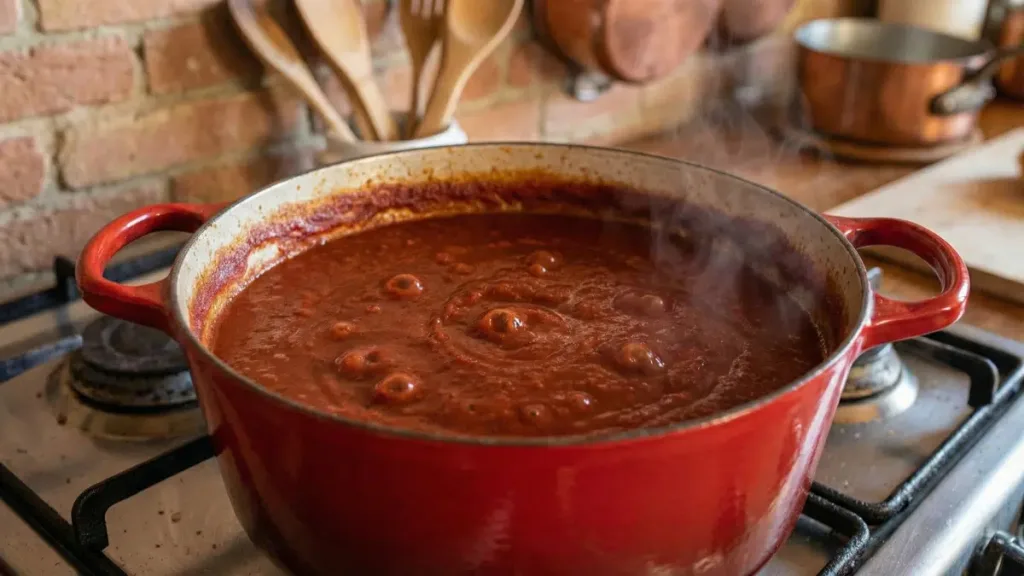
You cannot use a quick tomato sauce or a simple marinara. You must use an authentic Neapolitan Ragú. This ragu differs significantly from the Bolognese style in that it does not use ground meat, but rather whole cuts (ribs, muscle rolls) cooked in tomato sauce for 6 to 8 hours until the meat falls apart. The sound of the ragu slowly simmering—known locally as pippiare—is the essential soundtrack of the Neapolitan Sunday.
3. Protein Load: The “Polpettine”
Here, there is no ground meat simply scattered about. The opulence of Carnival food in Naples demands the use of polpettine. These are tiny meatballs (the size of a hazelnut or a small marble) made of veal and pork, bread, egg, and parmesan.
The technical secret: These meatballs must be fried before putting them into the lasagna. If you put them in raw, they will boil and become soft. By frying them first, they maintain their texture and savory flavor inside the oven structure.
4. Cured Meats and Cheeses: Cervellatine and Fior di Latte
In addition to the meatballs, layers of Cervellatine (typical thin Neapolitan sausages) sliced into rounds and Salame Napoli cut into cubes are added. For the cheese, we use Fior di latte (cow’s milk mozzarella) that has been left to dry in the fridge a day before so it doesn’t release water and ruin the structure, often mixed with smoked Provola to add depth.
Other Carnival Food in Naples: Savory Alternatives
Although lasagna dominates the conversation, Carnival food in Naples is a broader universe. In many households, especially in the more traditional or aristocratic areas (like the Vomero zone), an equally rich alternative is served.
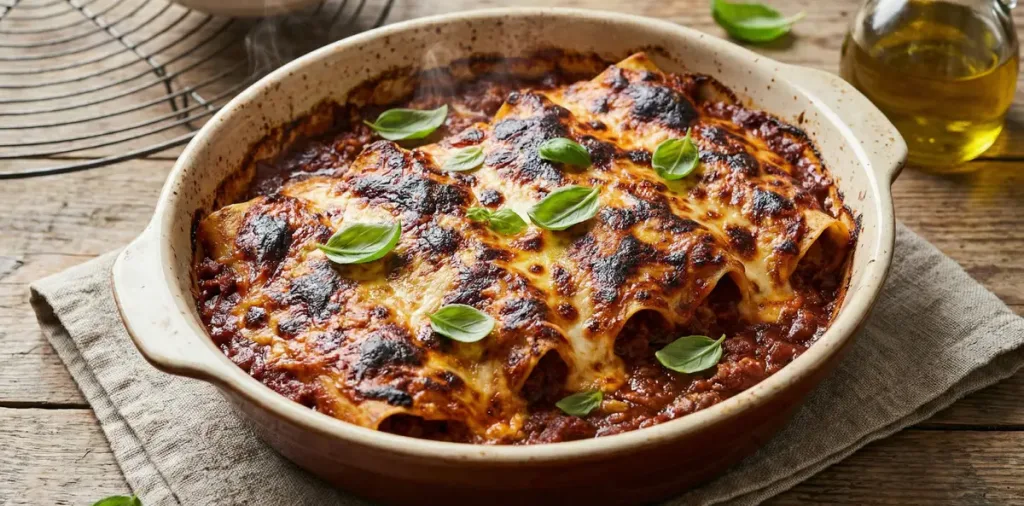
Cannelloni alla Napoletana:
These are not a Catalan invention in this context, but a local adaptation. They are filled with a mixture of braised meat, ricotta, and mozzarella. The secret of Neapolitan cannelloni is the “Abbrustolito”. They are covered with a generous amount of ragu and Parmesan or Grana Padano cheese, and baked at high heat at the very end to create a dark, almost burnt crust. This provides a delicious bitter and toasted flavor that contrasts with the sweetness of the tomato.
The “Secondo”: The Meat of the Ragu
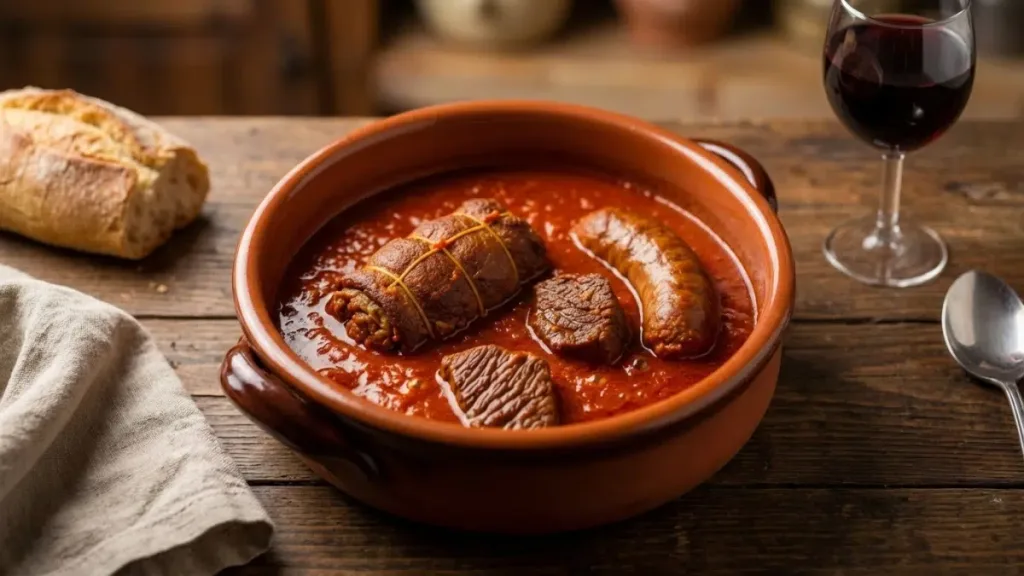
In the logic of abundance and waste prevention, nothing is thrown away. The meat that was used to flavor the lasagna ragu (the pork ribs or tracchiulelle, and the beef cuts) is served as a second course. It is often accompanied by Friarielli (broccoli rabe sautéed with garlic and chili) to cleanse the palate from so much fat.
Carnival Desserts: The Sweet Finale and the Empire of Frying
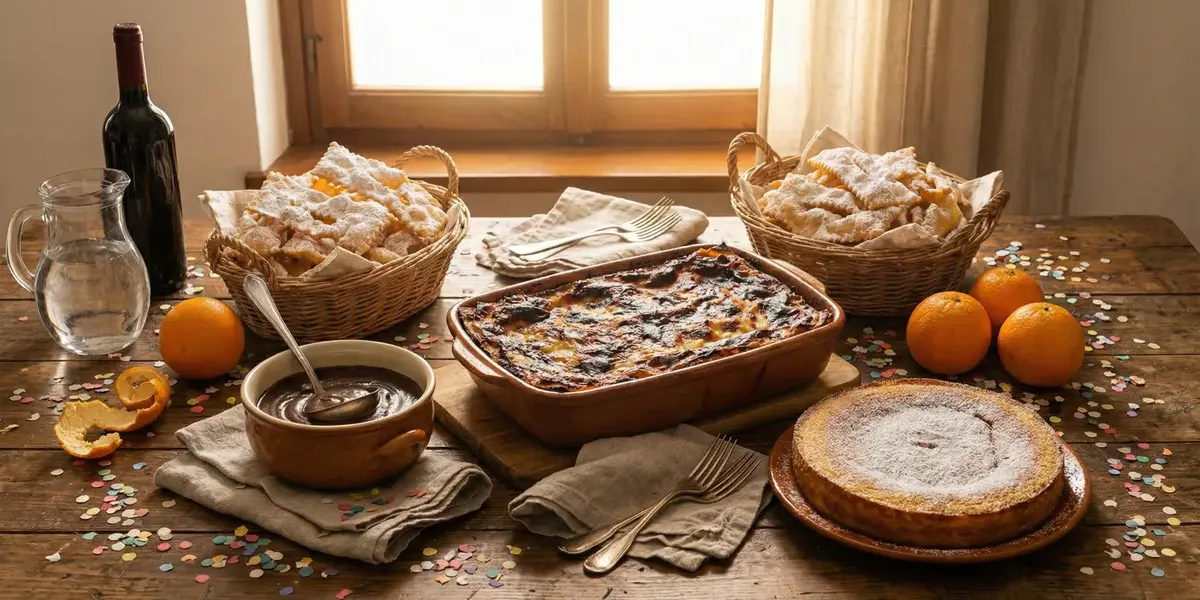
There is no Carnival food in Naples without a massive dose of sugar and, above all, frying. The smell of hot oil, vanilla, and citrus floods the streets of the city throughout February. Here, we do not bake; we fry. It is the last great sin before Lent.
1. Chiacchiere (The Crispy Sheets)
Chiacchiere are the universal symbol of the Italian carnival, but in Naples, they reach their maximum expression. They are sheets of dough (made of flour, egg, sugar, and butter) fried and dusted with powdered sugar.
The Technique of the Perfect Bubble: They are thin as paper. To be authentic and light, they must have large bubbles (bolle) on the surface. This is achieved through two technical tricks:
- The Alcohol: White wine, Grappa, or Marsala is added to the dough. The alcohol evaporates instantly upon touching the hot oil, expanding the dough and creating the bubble.
- The Rolling: A pasta machine must be used to leave the dough almost translucent.
They are eaten alone or, even better, dipped in Sanguinaccio (see below).
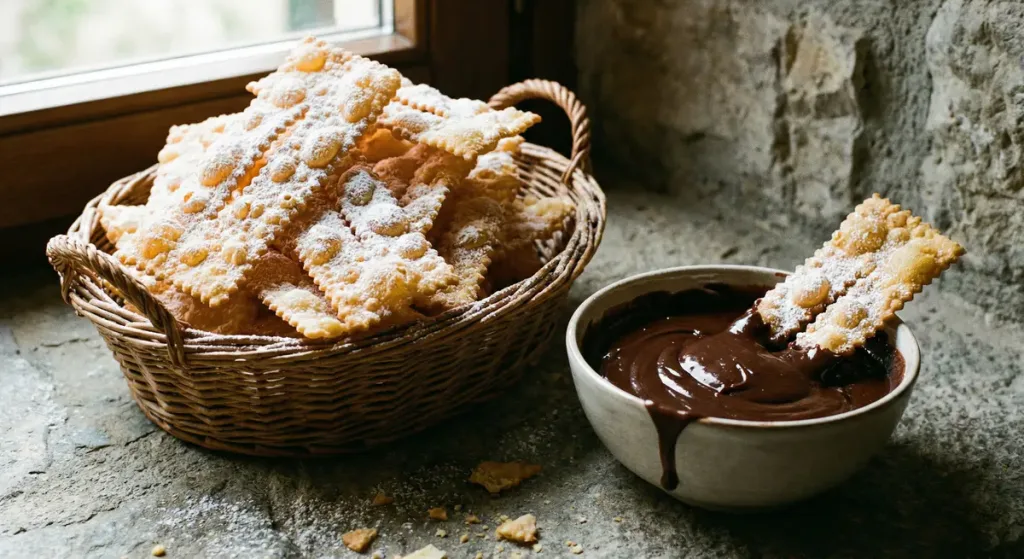
2. Sanguinaccio Dolce: The “Forbidden” Chocolate
The inseparable companion of the Chiacchiere. Historically, the Sanguinaccio was a cream made with dark chocolate and fresh pig’s blood (collected during the January slaughter, following the philosophy that “nothing of the pig is thrown away”). The blood provided creaminess and a unique ferrous touch, as well as being a pagan symbol of life. Today, the sale of blood is prohibited for health reasons, so the modern Sanguinaccio is a rich cream of dark chocolate, thickened with starch and intensely flavored with cinnamon and vanilla. It is dense, dark, and sinful.
3. Castagnole and Migliaccio
While chiacchiere are crispy, the castagnole provide the tender counterpoint. They are small balls of fried dough, similar to wind fritters but denser, like small fried sponge cakes. The Neapolitan secret for castagnole is to flavor them with Sorrento lemon zest and roll them in granulated sugar (not powdered) right out of the oil, so the sugar crystallizes with the heat.
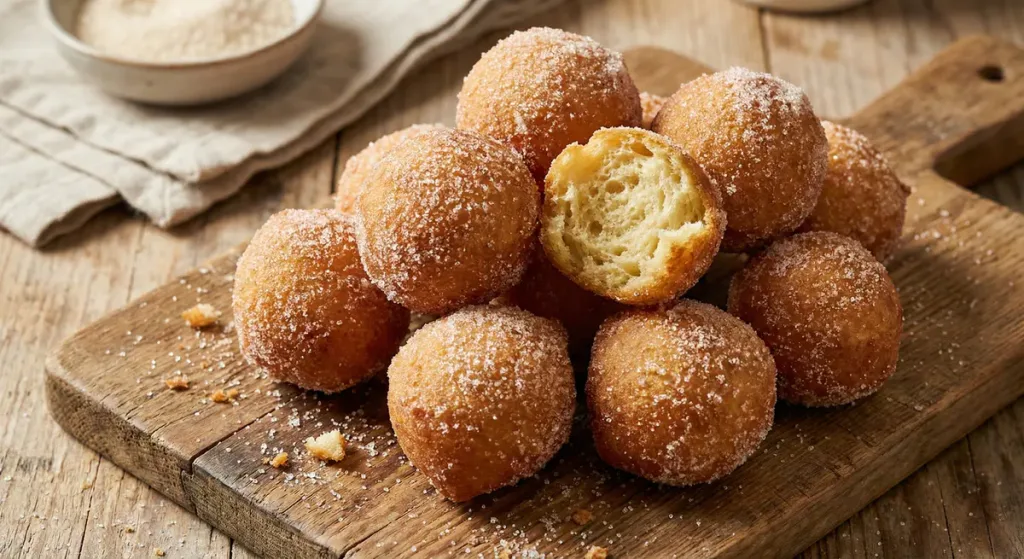
Finally, we cannot forget the Migliaccio Napolitano. Unlike the previous ones, this cake is baked. It is a tart of medieval origins originally made with millet (millo, hence its name), but today it is prepared with wheat semolina and ricotta. It has a moist and dense texture, similar to a cheesecake but with the rustic touch of semolina, and it smells of Millefiori (orange blossom water), anticipating the aromas of the Easter Pastiera.
Beyond the feast: The Neapolitan carnival masks
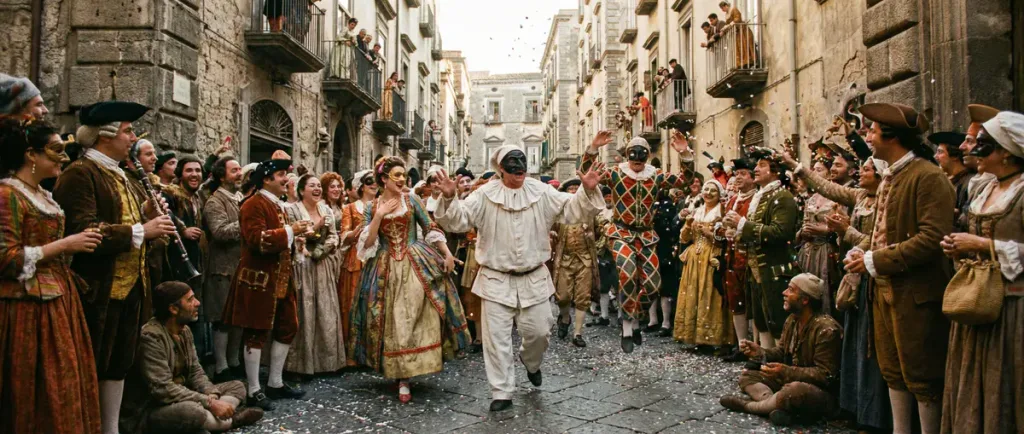
The festive atmosphere would not be complete without the mystery of the Neapolitan carnival masks. While you enjoy a plate of lasagna or sweet chiacchiere, remember that every costume tells an ancient story. For this reason, I invite you to learn about the origin of iconic characters like Pulcinella. Besides the food, folklore defines our deepest identity. Discover here everything about the traditions and figures that bring our streets to life every February.
Conclusion: An Act of Cultural Resistance
Preparing Carnival food in Naples is much more than simply cooking; it is an act of love and cultural resistance. In a world that tends toward uniformity and perpetual diets, the Neapolitan Carnival reminds us of the importance of celebrating, sharing, and enjoying without guilt.
Whether you dare to construct the complex architecture of the lasagna or simply decide to fry a tray of Chiacchiere for your family, you will be participating in a centuries-old tradition that keeps the identity of Naples alive. So, put on your apron, turn up the music, and remember: a tavola non si scherza.
Buon appetito e Buon Carnevale!