 Mariella
 Many travelers wonder: Is Three Kings Day celebrated in Italy? The answer is distinctively Italian. While the rest of the world waits for the Magi (Melchior, Caspar, and Balthazar), Italian children look to the sky for someone else. She doesn’t wear a crown, but a scarf and flies on a broomstick. Her name is La Befana. If you want to understand why she is the true queen of the Epiphany in Italy, especially in Naples, read on.
Three Kings Day in Italy vs. La Befana: Who brings the gifts?
To understand the history of La Befana, one must know that her name is a popular derivation of the word Epiphany (the manifestation). Although today she is a figure adored by children, her story has a touch of melancholy and redemption that makes her unique.
The Christian legend is central to the history of La Befana: it tells that the Magi, lost on their way to Bethlehem, knocked on an old woman’s door to ask for directions. She attended to them, but when they invited her to join their caravan to adore the Child, she refused. She argued that she had too many household chores: she had to sweep the floor and clean the house.
Hours later, regret invaded her. She prepared a basket with her own homemade sweets and ran out to look for them, but she never found them. Since then, as the history of La Befana tells it, on the night of January 5th the old woman flies from house to house, leaving gifts for all the children she finds, in the hope that one of them is the Baby Jesus whom she refused to visit because she was sweeping her house.
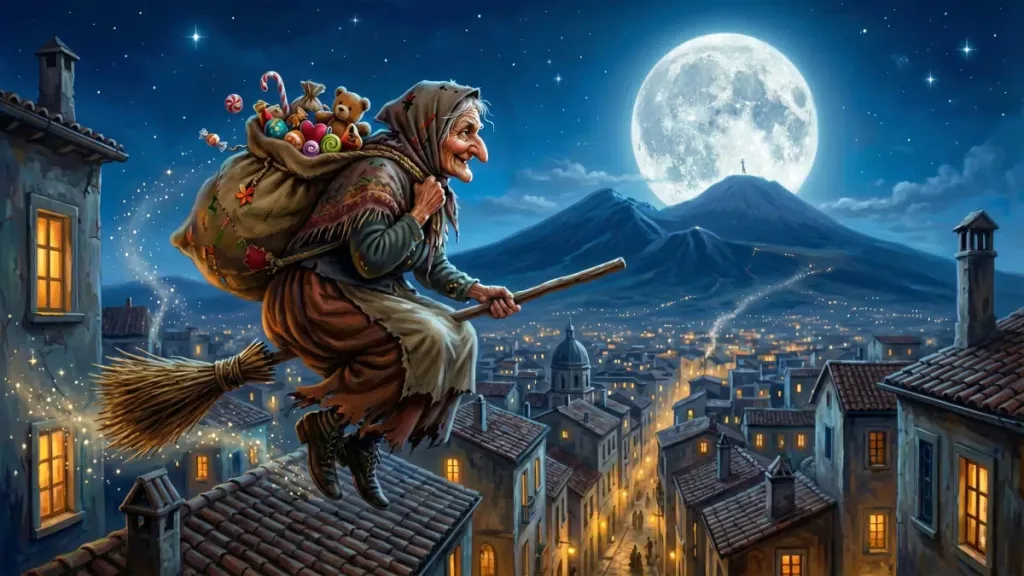
“L’Epifania tutte le feste le porta via” (Epiphany takes all the holidays away).
The history of La Befana in Naples: Piazza Mercato
Although it is a national tradition, Three Kings Day in Italy—or the Epiphany—is lived with an almost theatrical intensity in Naples. If you are lucky enough to be in the city these days, there is a place where time stands still: Piazza Mercato.
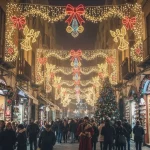
During the night of January 5th to 6th, this historic square becomes a bustling and chaotic open-air market. Hundreds of stalls sell sweets, toys, and Befana dolls until dawn. It is customary for families to go there at the last minute to buy “coal” and sweets at popular prices. The smell of candied sugar mixes with the cold January air and the shouting of the vendors.
If you visit Naples on these dates, this is an event of pure Neapolitan anthropology that you cannot miss (check more at Italia.it). And to withstand the cold of the night, nothing better than a good hot Neapolitan Coffee before going out.
The Legend: Was La Befana chasing the Three Kings?
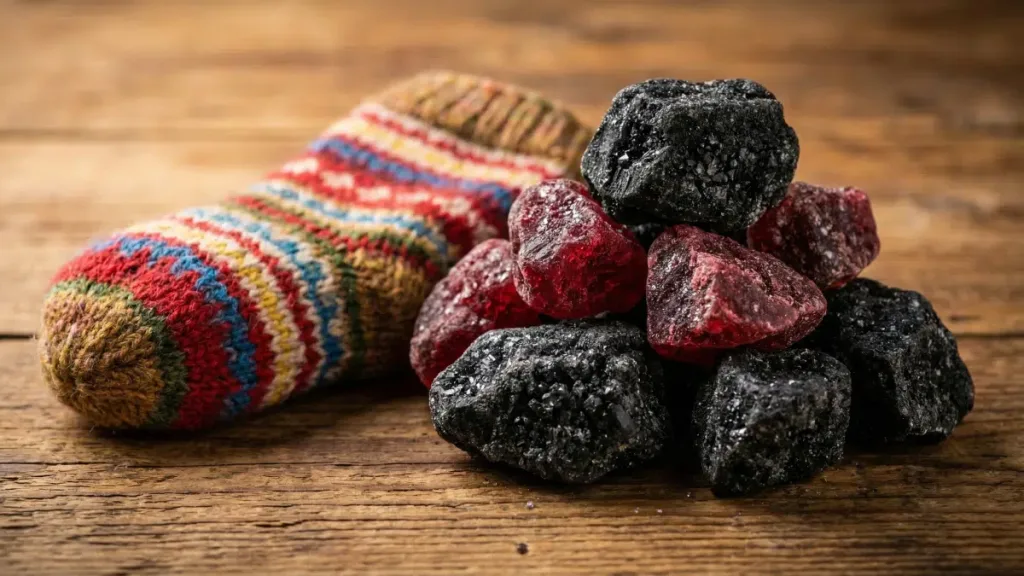
Unlike Santa Claus, La Befana is not ostentatious. She does not leave large boxes under the tree, but small treasures inside long socks (calze) that are hung on the fireplace or near the window. As the history of La Befana dictates, her judgment is final:
- For good children: Candies, chocolates, tangerines, nuts, or small toys.
- For naughty ones: Coal.
But in Italy, even punishment has flavor. Master confectioners invented Carbone Dolce (sweet coal), a rock of crystallized sugar, black and hard, which looks like real coal but melts in your mouth. It is the way grandmothers say: “You behaved so-so, but I love you anyway.”
How to receive La Befana at home (Italian Style)
Do you want to bring the spirit of Three Kings Day in Italy to your home?
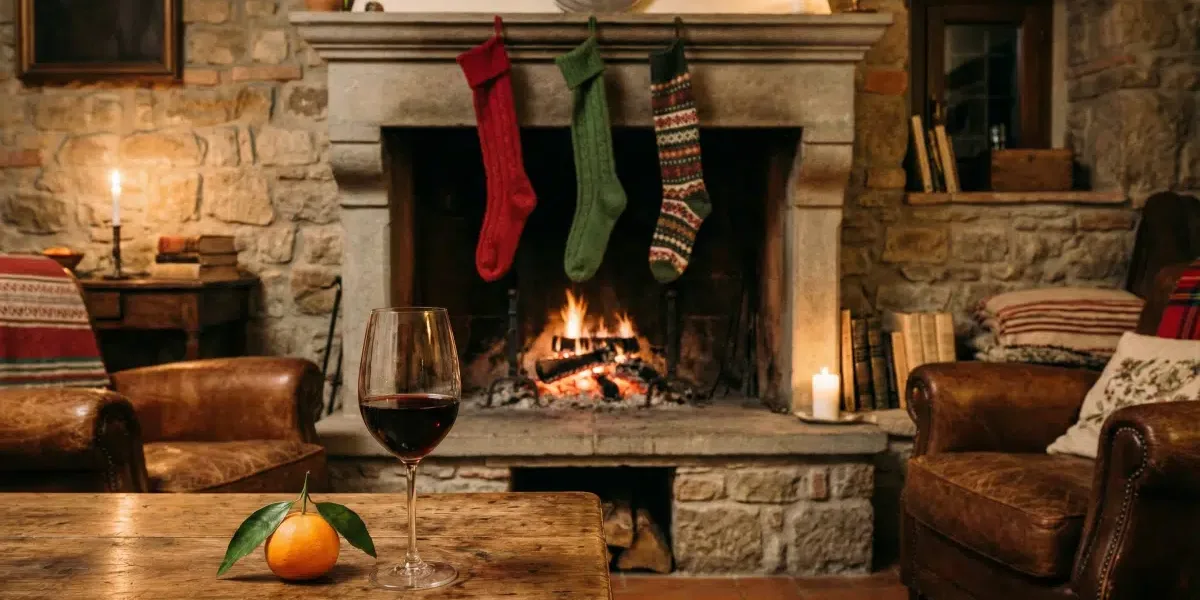
- The Stocking: On the night of January 5th, hang a large and colorful stocking for each family member (adults count too!).
- The Offering: Prepare on a small table a tangerine (or seasonal fruit) and, very importantly, a glass of red wine. La Befana likes wine to warm up after flying on her broom all night.
- The Breakfast: The next day, January 6th, you eat for breakfast whatever you find inside the stocking.
With the arrival of La Befana, the Christmas lights go out, but we are left with the comfort of good food and the return to normality. Of course, before saying goodbye to the holidays, make sure you have complied with all the traditions to start the year on the right foot. Have you tried our New Year’s Lucky Lentils? If you have leftovers, they say they bring money all month long.
Now that you know the history of La Befana in detail, you are ready to live the magic.
Frequently Asked Questions about La Befana
When does La Befana arrive?
La Befana arrives on the night of January 5th (Epiphany Eve) to leave gifts and sweets in children’s stockings for them to find on the morning of January 6th.
What does La Befana leave for children?
For well-behaved children, she leaves candies, chocolates, and small toys. For naughty children, she leaves “coal,” which is traditionally black-dyed crystallized sugar (sweet coal).
What is the legend of La Befana?
The legend tells that the Three Wise Men invited an old woman to join them in adoring Baby Jesus, but she refused because she was cleaning. Regretful, she went out looking for them with sweets but never found them. Since then, she flies every January 5th leaving gifts in houses, searching for the Child.
¡Buona Epifania a tutti!