 Mariella
 Neapolitan Ragu (Il Ragù Napoletano) is the condiment that, considered one of the most emblematic of Naples (external link), goes far beyond a simple sauce: it is a family rite, a tradition reserved for Sundays or holidays, when there is time and willingness to pay it the homage it deserves.
The Secret: Patience and “Pippiare”
Unlike other quicker sauces, Neapolitan ragu requires patience. It is cooked very slowly, almost like a whisper, allowing the flavors to develop in depth. Originally, it was not just a condiment for pasta: it was a complete menu.
- First, the pasta was served bathed in the sauce.
- Second, the meat that had cooked for hours in that same concentrated and tasty juice was served as the main course.
Quality Ingredients: The Base of Success
The ingredients of Neapolitan ragu are simple but must be of the best quality. The base is, of course, a good crushed tomato. In my family, my parents prepared their own tomato preserves every summer: a tradition that smelled of Fresh Basil, effort, and future flavor. But if homemade tomatoes are not available, varieties like San Marzano Tomato, or brands like Mutti or Cirio, are perfectly valid and respected in Neapolitan cuisine.
Meat is another fundamental pillar. You can’t miss a generous assortment: pork ribs, large chunks of beef, Italian sausage, and of course, the queen of ragu: the braciola. The latter is a beef fillet rolled and tied with kitchen string, stuffed with Parmesan cheese, garlic, and parsley. A delicacy that concentrates all the flavor of tradition.
This sauce is often accompanied by other classics from the family repertoire, such as some homemade Meatballs with tomato and a generous portion of Parmigiana di Melanzane, making it a true feast of flavors.
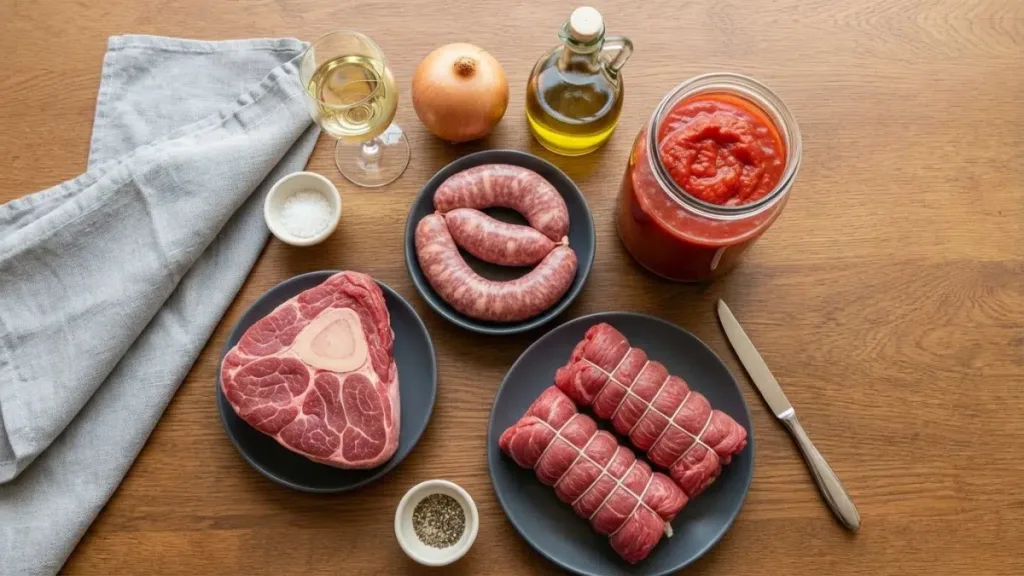
Ingredients for Neapolitan Ragu (Serves 4)
- 400g beef shank (muscle, with some fat, ideal for stewing).
- 300g fresh Italian sausage (preferably with fennel).
- 1 or 2 braciole (beef slices rolled with parmesan, garlic, and parsley, tied with kitchen string or toothpicks).
- 1 onion.
- 1 glass of dry white wine (or red, depending on preference).
- 150 ml extra virgin olive oil.
- 3 liters of tomato puree (Passata).
- Salt and pepper to taste.
- (Optional) ½ liter of water to lighten the sauce during cooking.
Authentic Ragu Preparation Step-by-Step
1. Sear the Meat
In a large pot, brown all the meat well on all sides. It is essential to seal it properly to preserve its juices and enhance its flavor.
2. Sauté the Onion
Add the chopped onion to the same pot and let it sauté until transparent, taking advantage of the juices released by the meat.
3. Add the Wine
Pour in the glass of wine and let it evaporate completely. This step is key to eliminating the acidity of the alcohol and adding complexity to the final flavor of the Neapolitan ragu.
4. Add the Sauce
Once the wine has evaporated, add the tomato puree along with half a liter of water. Season with salt and pepper, cover the pot, and let everything cook very slowly over low heat.
5. Stir with Love
It is important to stir occasionally to prevent the sauce from sticking to the bottom and to distribute the flavor well.
6. Slow Cooking (The “Pippiare”)
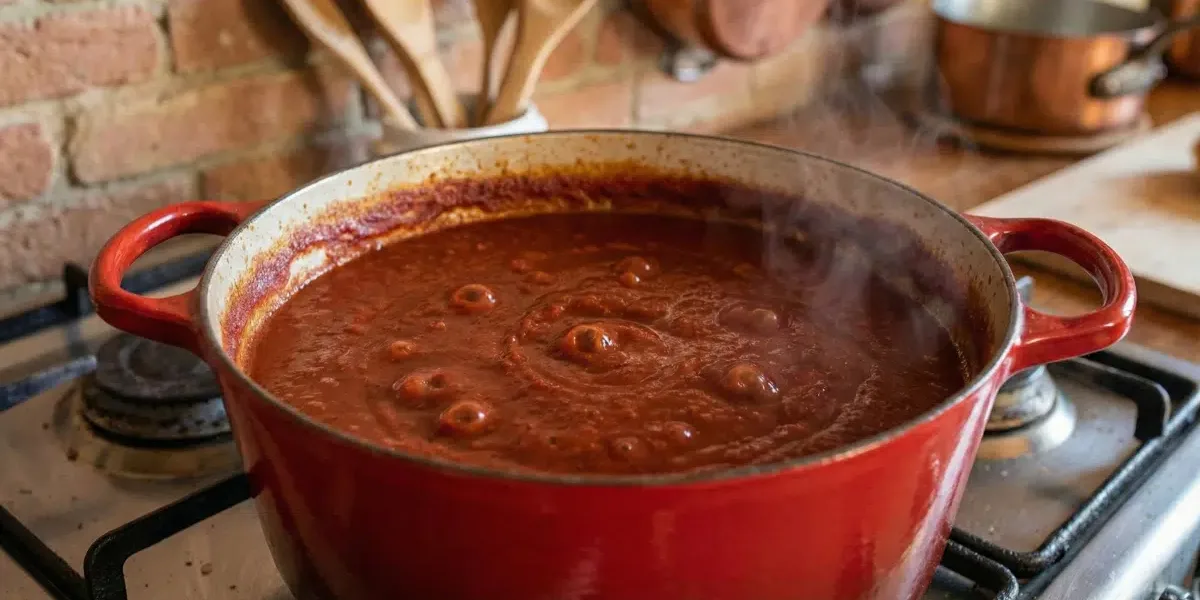
The cooking of this sauce is very long. You can start it the day before and let it cook over very low heat for about 4-5 hours; the result should be a full-bodied, dense, and dark sauce.
7. Serve
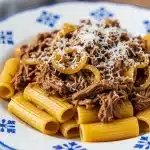
Once the ragu is ready, cook your favorite pasta (Ziti or Rigatoni) and serve it with a generous amount of sauce and a good handful of grated [Parmigiano Reggiano] (internal link).
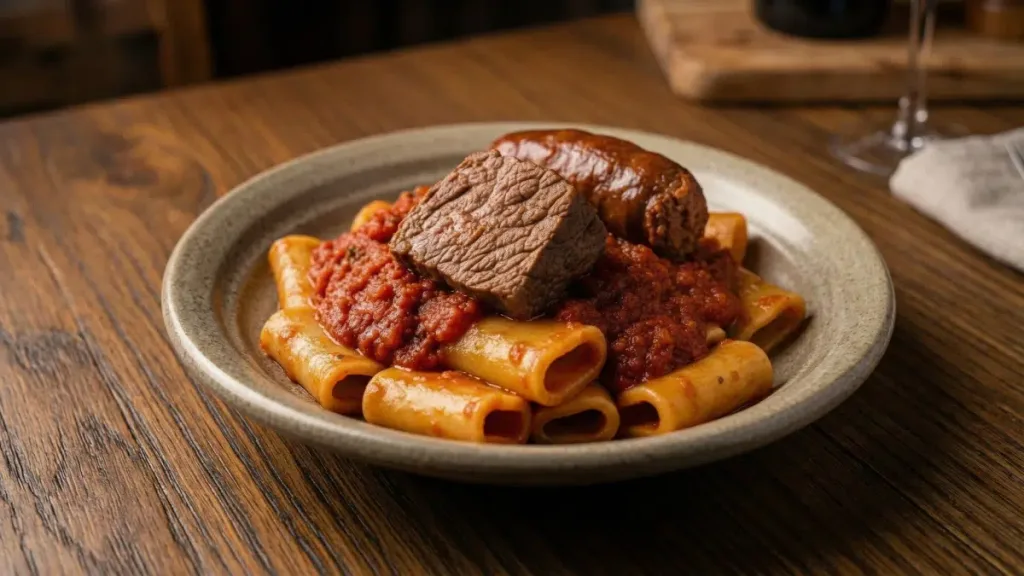
Remember: To get a perfect Neapolitan Ragu, time and patience are required. The secret lies in the low heat (pippiare) and the hours of cooking that allow the ingredients to fuse into a unique harmony of flavors. I often start cooking it myself the day before so that the next day its flavor is even deeper and more enveloping.
Recipes Born from Neapolitan Ragu
One of the wonders of this sauce is its versatility. From the same preparation, you can give life to such classic dishes as:
- Parmigiana di Melanzane: Where the ragu replaces the simple tomato sauce.
- Meatballs with tomato: Cooked inside the sauce.
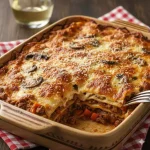
- My Family’s Lasagna: The Neapolitan version.
- Sartù di riso: A stuffed rice timbale typical of Neapolitan cuisine.
- Baked pasta (Pasta al forno).
- Gnocchi alla sorrentina.
Neapolitan ragu is not just food: it is memory, family, and celebration. It is the aroma that envelops you when you wake up on a Sunday morning, the sound of the chup-chup in the pot, and the promise of a hearty, shared meal. It is a heritage that is passed on with every spoonful.
If you dare to try it, let me know in the comments! I will be happy to read you.
Sunday tradition and Neapolitan carnival masks 🎭

The aroma of ragù unites us, but the folklore of Neapolitan carnival masks identifies us to the world. Especially during the Sundays of February, cooking and popular theater merge in every home. Pulcinella, our symbol par excellence, embodies that irony and eternal hunger that ragù masterfully satisfies. Therefore, if you want to understand the soul of our city, you must know its historical costumes. Read our special article and be surprised by the secrets hidden behind the mask.
With much love, Your Neapolitan girl!
FAQ: Understanding Authentic Neapolitan Ragu
How is Neapolitan Ragu different from Bolognese sauce? Neapolitan Ragu uses whole cuts of meat (like beef chuck and pork ribs) stewed in tomato sauce, whereas Bolognese is a meat-based sauce using ground meat and very little tomato. Neapolitan ragu is heavily tomato-focused and relies on onions rather than the celery-carrot-onion soffritto typical of Bologna.
How long does it take to cook authentic Neapolitan Ragu? True Neapolitan Ragu is a labor of love, typically requiring 6 to 8 hours of cooking. The sauce must simmer gently (“pippiare”) until it becomes dark, thick, and rich. It is traditionally prepared on Saturday to be served for Sunday lunch.
What pasta is best served with Neapolitan Ragu? Tradition dictates pairing this rich sauce with short, tubular pasta that can hold the heavy sauce. The most classic choice is Ziti (broken by hand into pieces) or Paccheri. Longer pasta formats like spaghetti are rarely used for this specific ragu in Naples.
Is Genovese sauce the same as Neapolitan Ragu? No, despite both being pillars of Neapolitan cuisine. Genovese is a white sauce (no tomato) made by slow-cooking beef with a massive amount of onions until creamy and amber-colored. Neapolitan Ragu is strictly red and tomato-based.